Organising team tasks: If I can’t see it, I can’t solve it
Rather than being created on a digital platform, tasks usually arise beforehand: in meetings, workshops, and conversations. Yet often enough, they end up nowhere. The result? Added work, overall confusion, and the never‑ending question, “Who’s doing what – and when?” Digital task management doesn’t solve this by adding more planning into the mix, but rather by adding visibility. It turns vague agreements into clear commitments – right where collaboration actually happens.
The essentials at a glance
- Origin: Tasks are created in meetings, workshops, and conversations, but are often not captured in a tangible way.
- Problem: Missing transparency leads to confusion, rework, and the familiar question, “Who’s doing what by when?”
- Approach: Digital task management isn’t about more planning but about clear commitments made within the context of the project.
- Solution: With Conceptboard, tasks are created exactly where collaboration happens – while working on the board, not afterwards.
- Outcome: Decisions become visible, responsibilities clear, and collaboration turns into measurable progress.
Kickstart task implementation on the spot
A familiar scene: The meeting is going well. Everyone is engaged, ideas are flying, decisions are being made. The energy is there. Then, just before the end, someone says, “Okay, I’ll summarize this later.”
In these moments something crucial happens: All the energy in the room dissipates. Between “We decided” and “It actually happens”, an invisible gap suddenly appears. Sooner or later, someone has to bridge it with reports, emails, and lists. Yet this is precisely where the opportunity lies to trigger the implementation right away.
All tasks are already there
Here’s the key point: You’re already creating tasks. When someone asks, “Can you do the draft?” that’s a task. When someone says, “Let’s clarify this with the marketing team,” that’s also a task.
The problem isn’t a lack of tasks, it’s their lack of visibility. They hang in the air, get scribbled into notebooks or dropped into a chat. And then the guessing game begins: Who was supposed to do that again? By when? Did so and so already take care of it?
Digital task management doesn’t mean you have to plan more. It’s simply about making visible what is already happening.
What task management really is
Many people associate task management with administration, extra effort, and yet another tool that needs to be maintained. In reality, it’s the opposite: good task management saves time. It turns fuzzy agreements into clear commitments.
At its core, there are four questions that need to be asked:
- What needs to happen? – A concise description, not an essay
- Who owns it? – One person, not “the team” or “all of us”
- By when? – A real date, not “sometime soon”
- Why are we doing this? – The context, so the task doesn’t float in a vacuum
If these four points are clearly defined, the task is clearly understood. And what’s understood can quickly be completed.
The crux of project management
Here’s where it gets interesting: Many teams jump straight into project management tools or software. They create Gantt charts, define milestones, and allocate resources. But if the individual tasks haven’t been properly captured, none of that helps.
Projects only reach the finish line when it’s clear what actually needs to be done. Task management is the foundation for that. It ensures that responsibilities are assigned, dependencies are visible, and that there is something concrete to manage in the first place.
However, this doesn’t mean that every task automatically becomes a project. Rather, it means that without concrete tasks, even the best project management tool is just smoke and mirrors. Put differently: you can’t manage a project without managing tasks.
Tasks arise where collaboration happens
Imagine you’re in a workshop. Someone throws in an idea, the group discusses it, nods, and agrees. Right there and then the idea turns into a task, visible to everyone.
There’s no “I’ll write this up later,” no postponed rework. The implementation of the idea starts right where collaboration happens. Instead of transferring thoughts into lists at a later point, tasks are created on the board, prioritized, and assigned.
This is the key difference between list tools and visual task management. The task doesn’t live isolated in an app; it arises directly in the work context, on the board, during the discussion.
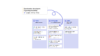
With Conceptboard, it’s simple: an idea on a sticky note becomes a task with responsibility, a deadline, and a processing status – with a single click. Most importantly, it stays connected to everything happening around it. Visual work and task management are linked. Decisions become easy to find, responsibilities are obvious, and no one has to fight their way through a jungle of tools. Ideas turn into tasks, collaboration turns into progress.
Tasks don’t have to be big, they have to be clear
Many teams overcomplicate their task management. They believe every task has to be perfectly planned, embedded in a big system, and part of a master plan. That’s understandable, but there’s a simpler way: a task can be as basic as “Get feedback from Sarah,” “Research three design options,” or “Confirm the meeting with the client.” This can help make every step along the way more manageable.
Even if a task concerns only one person, it still belongs on the team board. Individual tasks have an impact too: they influence what happens next and are part of the bigger picture.
Organising tasks as a team is not about control; it’s about creating transparency for everyone, without anyone having to ask.
Getting things done
You might say to yourself: “Creating tasks, assigning owners, setting deadlines – I’m already doing all of that“. But: Does anyone actually see it? Your team? You, two weeks from now? Everything you do today is essentially a task. However, only once it’s visible does it become truly effective – because only then can it be tackled. The execution of tasks starts in the very moment of collaboration, which is exactly where Conceptboard comes in.
Conclusion: Managing tasks is managing their execution
Clarity comes through action. Start with a single task rather than a whole project. A task that is crystal clear, that someone takes responsibility for, that has a deadline. A task that everyone can see. You’ll find: One task leads to the next, and at some point, you’re no longer managing tasks – you’re managing the execution of an entire project.
Are you ready to rethink digital task management? Create your first task right where your ideas originate – in Conceptboard. Try our Kanban boards as visual workflows directly on the whiteboard.
Want to find out whether your task management is project‑ready? Use our checklist to assess the quality of your task management yourself.